

A featured contribution from Leadership Perspectives: a curated forum reserved for leaders nominated by our subscribers and vetted by the Construction Tech Review Advisory Board.

Lionrock Batteries Limited
Flexible Batteries Are Unleashing the Power of Smart Wearables
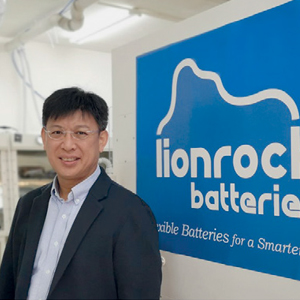
David Yeung
Conventional batteries are constraints to wearables
Wearables tend to go small for user comfort, but their batteries tend to go big for more capacity. Physical size limit of wearables are constraints to their battery power capacity. For smart watch, approximately 60 – 70%of its internal compartment is occupied by its battery. It is hard to further increase the power capacity without enlarging the device. Yet power is never enough. Apple probably would design Apple Watch for longer operating hours rather than needing a daily recharge, if there is a magic way to increase battery capacity yet keeping its neat size.
Besides limiting operating hours, small battery size is also limiting the choice of functional features of wearables. The maximum current a battery can deliver is related to its capacity (I.e. the C-rate). 1C, which means ‘current to fully discharge a battery in one hour’ is a typical stretch for a battery. Higher output current would significantly deteriorate the battery’s life. Smart cellular phone with2500 to 3000mAh lithium battery can easily support complicated functions. However, health bands/smart watches which typically have about80 to 300mAhare rarely designed for direct mobile communications.
Benefits brought by flexible batteries
The flexible batteries can be solutions to these constraints. Flexible batteries can possibly use ‘dummy’ parts for more power storage. It is possible to place a flexible battery under an odd-shape cover or within the soft part of a device. For example, a battery can be placed inside the watch strap. Placing lithium battery inside watch strap can hold approximately 200mAh. It means smart watch can nearly double its battery capacity with flexible battery. Another example is the smart ring. Conventional batteries which are typically in cylindrical or rectangular block form can hardly fit into a ring. Flexible batteries can easily bend and slot inside.
The flexible battery also facilitates better wearables design and improve their user comfort.
Instead of a rigid device, a chest-mount heart rate monitor can become a soft strap. Activity-tracking socks can avoid its bangle (which holds its battery). A soft strap will do. Smartshirts become possible. A 1mm thin bendable battery can be hidden completely under the collar.
There are less than 10 companies around the world, making flexible rechargeable batteries. They are using different technologies, ranging from a solid electrolyte to enhanced internal structure or package methods. Their stages of development vary from early-stage proof of concept to production pilot. Lionrock is using its unique nanofiber-structure technology to achieve its high energy density, safe, repeatedly bendable, and high charge/discharge C-rate properties. Lionrock is in pilot production stage.
Features of Lionrock flexible batteries
Lionrock flexible batteries are basically lithium-Ion batteries built with unique nanofiber structure. They use typical lithium ion battery chemistry. Hence the advantage of high energy density of Lithium ion battery is maintained.
The unique nanofiber structure inside the batteries can maintain a stable and safe battery structure. Even when the battery is deformed or bending, it can maintain constant and stable output power. There are also safety demonstrations showing the batteries are not hazardous when they are cut or pierced.
The battery allows bending to 25mm radius for 500 cycles. This curvature can comfortably fit around the human wrist as well as most body parts.
Another key feature of Lionrock batteries is it can support discharge current. Due to the high porosity of the nanofiber layer, the electric ion flow within the battery is more efficient than conventional Lithium batteries. It can support up to 2C discharging. Thus a tiny health band with a 150mAh flexible battery can feasibly support direct mobile communication.
High efficiency of Lionrock batteries also reduces battery deterioration and extends cycle life. It can achieve 1000 charge/discharge cycles and maintain over 80% capacity, versus typical 500 cycles industry standard.
Facilitate market adoption of flexible batteries
Flexible battery technology is picking up among the wearable industries. Through presenting and exhibiting at different events like IDTechEx, CES, WT (Wearable Technologies), CompuTEX, etc, Lion rock sees the industry evolving from discovering flexible battery 2 years ago to now searching for the right flexible battery. However, friction to adopting new technology is common. The industry sees re-designing a product to adopt flexible batteries a big decision.
Lionrock proactively reduces friction by providing trial samples and quick and low-cost customizing service. It’s pilot production line was set up to facilitate small quantity, quick turn-around sample making. Lionrock chose to use the common lithium battery chemistry -- though their technology also works with some advanced chemistry –to ease industry adoption. Their battery with the3.7V operating voltage saves the headache for electronics engineer from re-designing a system for the battery.
“Market adoption is our current priority. We keep researching new battery technologies for next-generation wearables in parallel,” said David Yeung.
Through its friction reducing measures, Lionrock achieved its initial success since its establishment in 2017. There are already customers from over 10 countries having projects trying their flexible batteries. Applications-in-trial includes watch strap, smart in-sole, pet collar, smart wallet, helmet, smart cards, and more.
‘Flexible batteries are fascinating because they are opening up creativity in wearables and IoT. We are excited that a renown sports brand re-activated R&D on smart apparel upon seeing our batteries. A medical company explored stick-on biometric sensor with us. New ideas are not just from traditional electronics tech companies. There are a lot of cross-industries inspirations beyond our imagination. We want to be enablers to these fascinating ideas. Hopefully, they are all “Lionrock inside”!’
There are less than 10 companies around the world, making flexible rechargeable batteries. They are using different technologies, ranging from a solid electrolyte to enhanced internal structure or package methods. Their stages of development vary from early-stage proof of concept to production pilot. Lionrock is using its unique nanofiber-structure technology to achieve its high energy density, safe, repeatedly bendable, and high charge/discharge C-rate properties. Lionrock is in pilot production stage.
Features of Lionrock flexible batteries
Lionrock flexible batteries are basically lithium-Ion batteries built with unique nanofiber structure. They use typical lithium ion battery chemistry. Hence the advantage of high energy density of Lithium ion battery is maintained.
The unique nanofiber structure inside the batteries can maintain a stable and safe battery structure. Even when the battery is deformed or bending, it can maintain constant and stable output power. There are also safety demonstrations showing the batteries are not hazardous when they are cut or pierced.
The battery allows bending to 25mm radius for 500 cycles. This curvature can comfortably fit around the human wrist as well as most body parts.
Another key feature of Lionrock batteries is it can support discharge current. Due to the high porosity of the nanofiber layer, the electric ion flow within the battery is more efficient than conventional Lithium batteries. It can support up to 2C discharging. Thus a tiny health band with a 150mAh flexible battery can feasibly support direct mobile communication.
High efficiency of Lionrock batteries also reduces battery deterioration and extends cycle life. It can achieve 1000 charge/discharge cycles and maintain over 80% capacity, versus typical 500 cycles industry standard.
Facilitate market adoption of flexible batteries
Flexible battery technology is picking up among the wearable industries. Through presenting and exhibiting at different events like IDTechEx, CES, WT (Wearable Technologies), CompuTEX, etc, Lion rock sees the industry evolving from discovering flexible battery 2 years ago to now searching for the right flexible battery. However, friction to adopting new technology is common. The industry sees re-designing a product to adopt flexible batteries a big decision.
Lionrock proactively reduces friction by providing trial samples and quick and low-cost customizing service. It’s pilot production line was set up to facilitate small quantity, quick turn-around sample making. Lionrock chose to use the common lithium battery chemistry -- though their technology also works with some advanced chemistry –to ease industry adoption. Their battery with the3.7V operating voltage saves the headache for electronics engineer from re-designing a system for the battery.
“Market adoption is our current priority. We keep researching new battery technologies for next-generation wearables in parallel,” said David Yeung.
Through its friction reducing measures, Lionrock achieved its initial success since its establishment in 2017. There are already customers from over 10 countries having projects trying their flexible batteries. Applications-in-trial includes watch strap, smart in-sole, pet collar, smart wallet, helmet, smart cards, and more.
‘Flexible batteries are fascinating because they are opening up creativity in wearables and IoT. We are excited that a renown sports brand re-activated R&D on smart apparel upon seeing our batteries. A medical company explored stick-on biometric sensor with us. New ideas are not just from traditional electronics tech companies. There are a lot of cross-industries inspirations beyond our imagination. We want to be enablers to these fascinating ideas. Hopefully, they are all “Lionrock inside”!’
Check Out : TOP WEARABLE TECHNOLOGY STARTUPS
The articles from these contributors are based on their personal expertise and viewpoints, and do not necessarily reflect the opinions of their employers or affiliated organizations.
